Everyone books move-out cleaning. Far fewer book move-in cleaning, and the ones who do almost always schedule it wrong — after the boxes are already inside. An empty unit is a completely different job, and you get one day to take advantage of it.
The previous tenant's cleaning, if it happened, was done to satisfy a landlord's checklist. That is not the same standard as the one you would apply to a place you are about to sleep in.
What only an empty unit allows
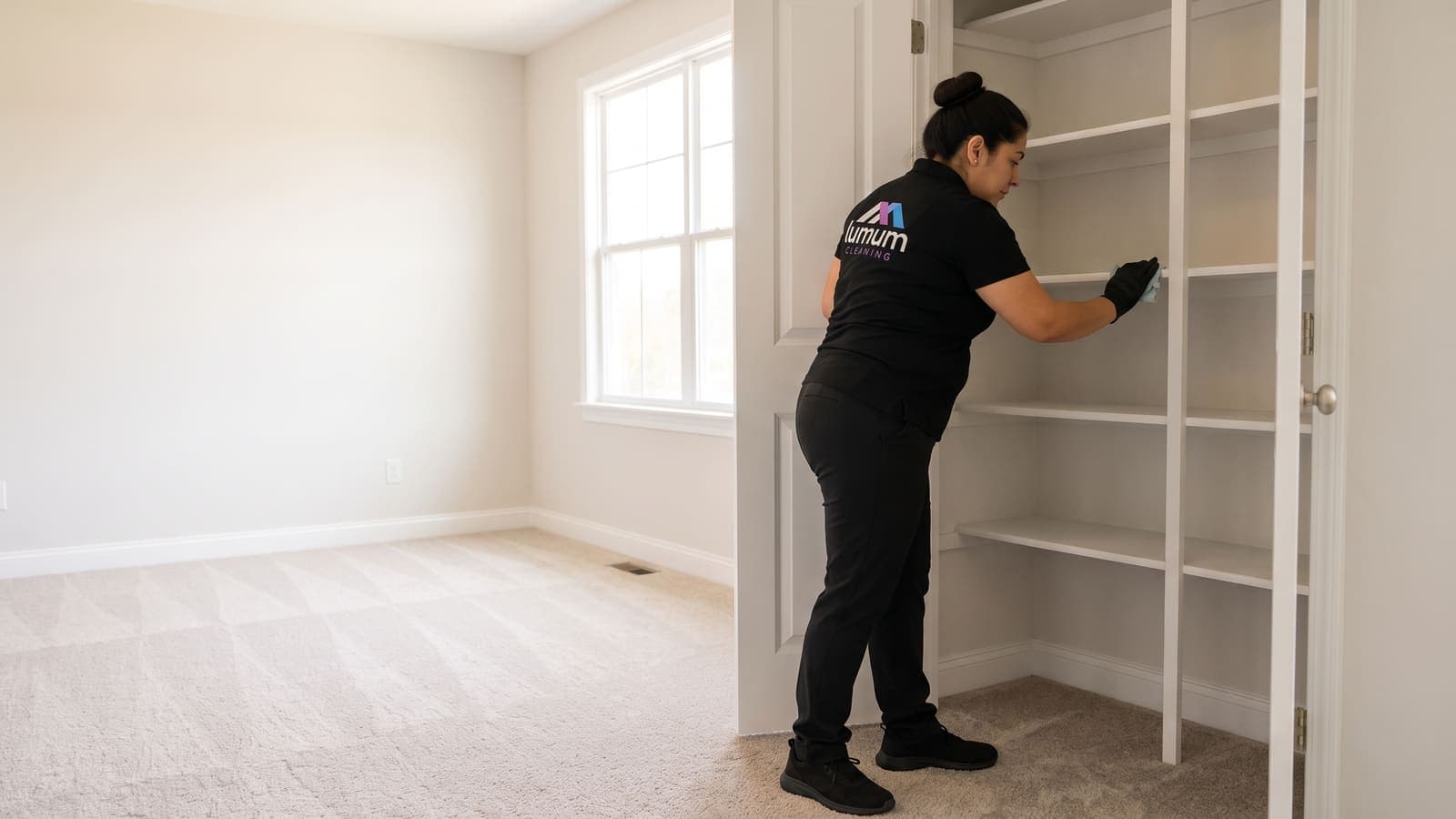
- Inside every cabinet, drawer and closet, including the shelf undersides
- Behind and under the appliances that stay with the unit
- The full length of every baseboard, not the visible two thirds
- Floors done last and done completely, with nothing to work around
- Inside the oven and fridge without negotiating around your food
Once the furniture is in, roughly a third of that list becomes impossible without moving heavy items, which is not something a cleaning crew will do.
The spots worth insisting on
- 1Inside the dishwasher, including the filter at the base — it is almost never touched between tenants and it is where smells come from.
- 2The refrigerator seal and the drip tray underneath.
- 3Bathroom exhaust fan covers, which collect years of dust.
- 4Inside the washer drum and the detergent drawer, if the unit has one.
- 5Light switch plates and door handles, which are the highest-touch surfaces in a home someone else lived in.
What it costs relative to move-out
The same, because it is the same job: an empty unit cleaned to the same scope. The price comes from the size of the place, not from which direction you are moving.
If you are buying rather than renting
Do it between closing and the movers. Sellers are not held to a cleaning standard the way tenants are, and a house that has been staged for viewings has usually been tidied rather than cleaned.