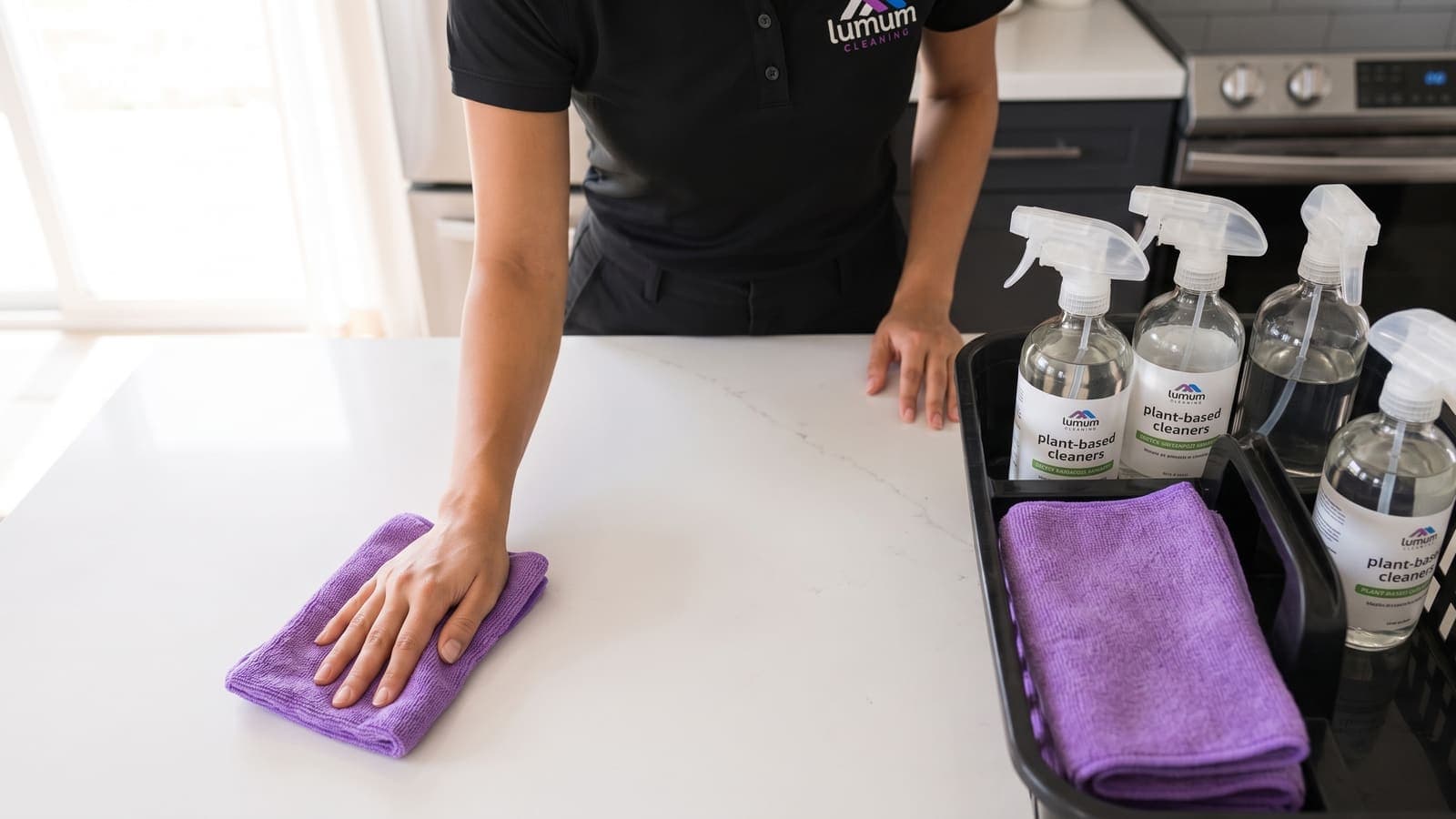
Biweekly suits most homes, and the reason is not budget. It is the interval at which a house does not have time to fall far enough behind to need catching up, which is what keeps each visit short and each visit cheap.
Frequency is the one decision that changes both what you pay and what you get, and most people default to it without thinking about how their home is actually used.
Start with traffic, not size
Four people in a two-bedroom generate more work than two people in a four-bedroom. Pets, small children, cooking every night and working from home all push the same direction. A large, lightly used house often needs less than a small, busy one.
The three intervals
- Weekly — households with pets and children, homes where someone cooks daily, or anyone who simply does not want to think about it. The home never leaves a good state.
- Biweekly — the default, and what most homes settle on. Two weeks is short enough that build-up does not start.
- Monthly — smaller spaces, single occupants, low-traffic homes, or people who tidy as they go and want the deeper surfaces handled.
Why recurring costs less per visit
It is not a loyalty discount. A home cleaned two weeks ago genuinely takes less time than one cleaned six months ago, so the visit costs less to deliver. Our biweekly rate runs about 15% below a one-time visit and monthly about 10%, and that gap is the time difference, not a promotion.
Start with a deep clean if it has been a while
Recurring service maintains a standard, it does not establish one. Starting a biweekly plan on a home with six months of build-up means the first several visits are spent catching up at maintenance speed. One deep clean first, then the plan holds it.
Changing later
Frequency should be adjustable month to month without a penalty. Households change — a new pet, a baby, a job that moves home — and a plan you cannot change is a plan you eventually cancel.