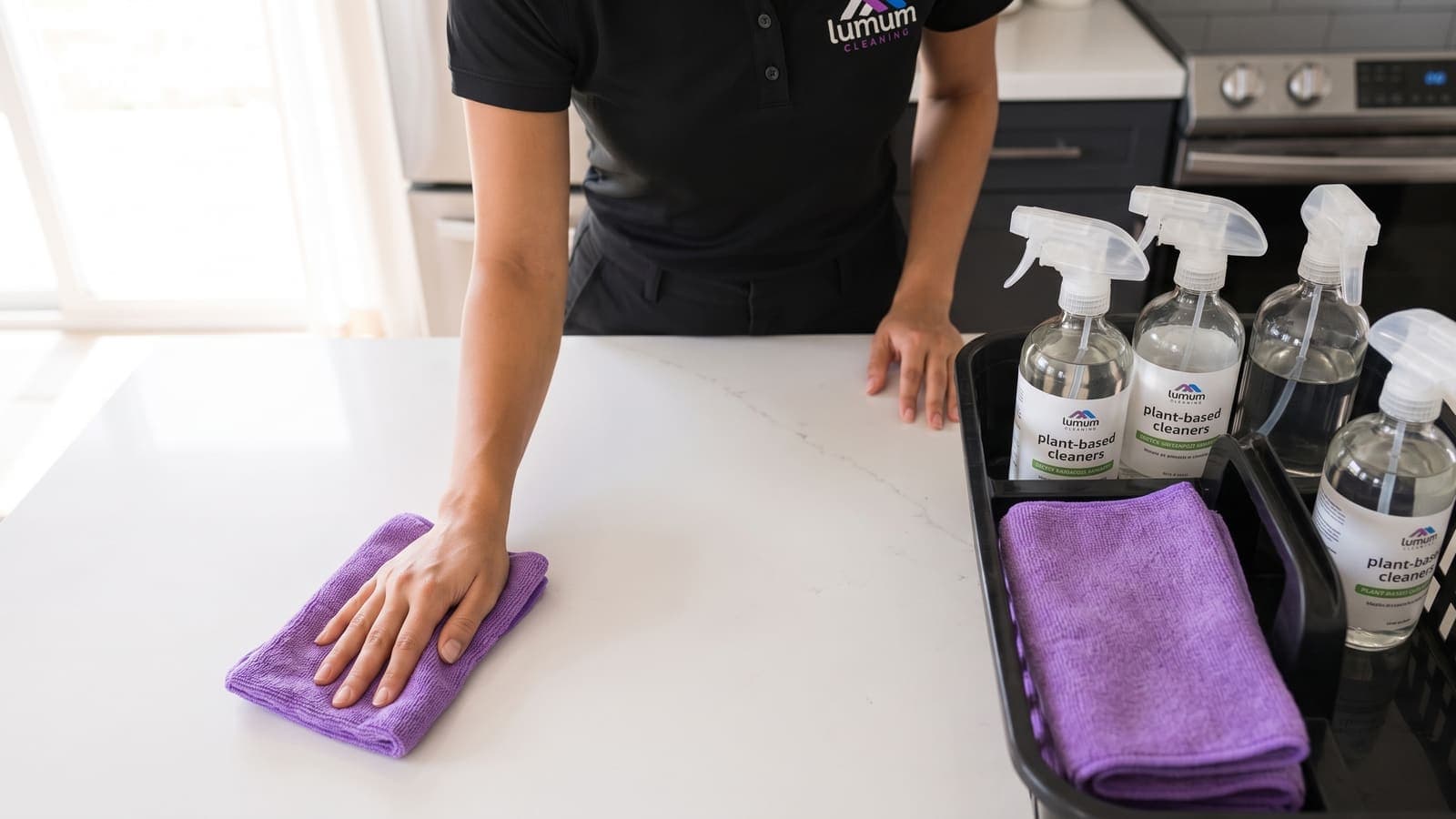
For most household cleaning, yes — surfactants do the work and plant-derived surfactants work. Where the honest answer changes is disinfection and heavy mineral scale, and any company telling you plant-based handles everything equally is selling rather than explaining.
"Eco-friendly" is not a regulated term in the US. A bottle can carry it with no verification at all, which means the label tells you less than the ingredient list does.
Where plant-based is genuinely equal
- General surface cleaning — kitchen counters, tables, cabinet fronts
- Floors, both hard and sealed
- Glass and mirrors, where technique matters far more than chemistry
- Everyday grease, given a little dwell time
- Bathroom surfaces that are cleaned regularly rather than rescued
Where it genuinely is not
- Disinfection to a medical standard. If you need registered kill claims, you need a registered disinfectant, and most plant-based products are not one.
- Heavy limescale, which needs a stronger acid than vinegar to shift in one pass.
- Mould remediation, which is not a cleaning job at all.
- Set-in organic stains, where enzymatic products beat both categories.
What to look for on a label
- 1A full ingredient list, not a marketing claim. Companies that disclose have less to hide.
- 2Third-party certification, which is verified where 'natural' is not.
- 3No fragrance masking. A strong scent often means something is being covered rather than removed.
- 4Clear dwell-time instructions. Products that work chemically tell you how long to wait.
Why it matters more with a service
A crew cleans your home while you are living in it, sometimes while children and pets are there. That is a different exposure profile from you cleaning your own bathroom with the door open for ten minutes. It is why plant-based is our standard rather than an upgrade, and why pet-safe formulations exist as a separate option for households that need them.